

The language is often transmitted by parents to their children, but those who wish to study Arabic don't always have solutions at hand. What are the solutions available to those who are not from Arabic backgrounds in order to improve their language skills? How can they learn the Arabic language in the Philippines? If you want to learn basic Arabic, Quranic Arabic, or even Arabic calligraphy, you will find an option that can help you. Private institutes, high schools, associations, websites...There are many options! But you will need to use all the tools available to learn Arabic if you are to be successful.


Not a Popular School Language
Arabic is spoken by communities around the world, and it is also an increasingly interesting language for Filipino learners who want to expand their linguistic and cultural knowledge. Arabic proficiency can range from knowledge of Modern Standard Arabic to regional dialects learned through family, travel, or cultural connections.
Given the importance of Arabic internationally, there are many ways to learn Arabic, from private tutoring and online language platforms to university courses and independent study.
However, Arabic is not among the most commonly taught foreign languages in Philippine schools. Students who want to learn it may therefore need to look beyond the standard school curriculum.
Universities and language institutions may offer Arabic courses, particularly for students interested in languages, international studies, Middle Eastern culture, or related fields. For younger learners and those who do not have access to a formal Arabic program, online Arabic tutoring can provide a flexible alternative.
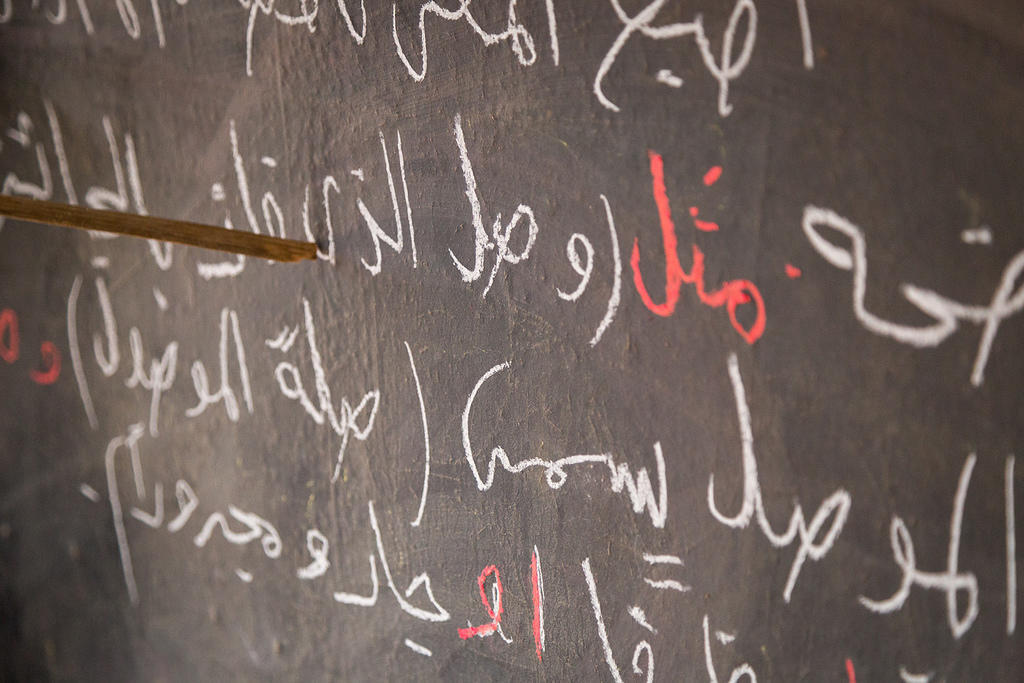
Despite its long history and its use by hundreds of millions of people around the world, Arabic is not among the most widely taught foreign languages in Philippine schools.
Opportunities to study Arabic in elementary, junior high, and senior high schools remain relatively limited compared with more commonly offered foreign languages. However, students interested in Arabic can find alternative ways to develop their skills outside the standard school curriculum.
Universities, language centers, religious and cultural institutions, and online learning platforms can provide opportunities to study Arabic. The language can also be learned through private tutoring, giving students the possibility to focus on Arabic reading, writing, grammar, pronunciation, and conversation according to their individual goals.
Now that we have looked at the limited presence of Arabic in the Philippine school system, let's explore the different ways Filipino students can discover and learn Arabic outside the classroom.
Learning Arabic with a Tutor
Private tutoring is one of the most accessible ways to learn Arabic in the Philippines. With one-on-one Arabic tutoring, you are not restricted to a particular school, language center, or location. With Superprof's Arabic tutors, you can learn from the comfort of your home and connect with a teacher from anywhere in the Philippines through online lessons. You simply need to find a tutor whose teaching style, experience, availability, and rates match your needs. But what are the real advantages of learning Arabic with a private tutor? First, private language lessons can be a flexible alternative to traditional language institutes. You can choose the frequency and duration of your lessons according to your schedule and learning objectives. If you prefer a more personalized approach than studying in a classroom with many students, one-on-one Arabic lessons can also be a great option. Instead of following a fixed group program, you can focus directly on the areas where you need the most practice. During an individual lesson, the tutor can dedicate their attention entirely to you. They can identify your weaknesses and gradually help you improve your Arabic proficiency. This is particularly useful if you are struggling with Arabic vocabulary, the Arabic script, pronunciation, grammar, or everyday expressions. Your tutor can correct your mistakes immediately and adapt the lesson to your level. One-on-one tutoring can also help you learn Arabic more efficiently, as every lesson is tailored to your specific goals and progress. Would you like to discover Arabic with a tutor? Explore your options for learning Arabic online in the Philippines and find a teacher who can help you achieve your language goals. You can also complement your lessons with books to learn Arabic and other online learning resources.
Introduction to Arabic Courses in a Private Institute

One solution which qualifies as language schooling is to go to a private language institute specializing in the Arabic language. This will allow you to meet certified teachers and above all to partake in a validated and trusted Arabic learning method. Here are some establishments to turn to in the United States...
Arabic Language Institutes and Courses
If you are looking for a more structured way to study Arabic in the Philippines, language institutes and formal courses can provide an alternative to private tutoring.
These programs can be suitable for learners at different levels, from complete beginners who want to learn the basics to more advanced students who want to improve their fluency and communication skills.
For students who want to focus particularly on speaking Arabic, look for programs that emphasize oral communication from the beginning. Smaller classes can also make it easier to participate, practice conversations, and receive feedback from the teacher.
Arabic language programs may have several objectives:
- promote Arabic as an international language of communication
- introduce students to Arabic-speaking cultures and societies
- use teaching methods adapted to the level and objectives of each class
- help learners develop practical skills in speaking, listening, reading, and writing
Some intensive programs may require students to complete a set number of classroom hours over several weeks. A placement test can also be used to determine the learner's level and place them in the appropriate class.
Language Institutes and Flexible Arabic Courses
Filipino learners can also look for language centers that offer Arabic alongside other foreign languages. These programs may provide different schedules, including daytime classes, evening sessions, and weekend lessons.
This flexibility can be particularly useful for students and professionals who want to learn Arabic without giving up their existing school, work, or family commitments.
Whether you choose an intensive language program, a regular group class, or one-on-one Arabic tutoring, the most important thing is to select a format that matches your current level, availability, and language-learning goals.
Take Arabic language course here.
Discover an Arabic Language Course at University
Universities in the Philippines
For Filipino students who want to study Arabic in greater depth, university programs can offer a more structured and academic approach to the language.
Depending on the institution, Arabic may be available as part of a language, humanities, international studies, Islamic studies, or cultural studies program. These courses can be particularly suitable for students who want to develop advanced language skills while gaining a broader understanding of the history and cultures of the Arab world.
From a linguistic perspective, university-level Arabic courses can cover grammar, vocabulary, reading, writing, listening, and speaking. Students may gradually progress from basic communication to more advanced analysis of Arabic texts and language structures.
The cultural component can also be an important part of studying Arabic at university. Students can explore the history, literature, traditions, and societies of different Arabic-speaking countries, gaining a better understanding of the cultural contexts in which the language is used.
Students interested in Classical Arabic may also study texts connected to Arab literary and religious traditions. Classical Arabic is particularly important for understanding historical texts and the Quran, while Modern Standard Arabic (MSA) is widely used in formal communication, education, media, and writing throughout the Arab world.
If you are considering Arabic at university, it is worth checking the curriculum of each institution carefully to see whether the program focuses primarily on Modern Standard Arabic, Classical Arabic, conversation, or a combination of these areas.

This type of university program would typically take several years to complete, with classes scheduled throughout the day and sometimes into the evening. However, the entry requirements and course structure will vary depending on the university in the Philippines.
If you are considering a degree or university program focused on Arabic, check whether prior knowledge of the language is required. Some programs may accept complete beginners, while others may expect students to have a basic understanding of Arabic before enrolling.
If you have little or no knowledge of the language, starting with an Arabic for beginners course can be a good option. You can build a foundation in the Arabic alphabet, pronunciation, vocabulary, and basic grammar before progressing to more advanced university-level studies.
Universities in the Philippines

If you want to learn Arabic in the Philippines, universities and higher education institutions can offer a more structured path for developing your language skills.
If you are planning a career in which Arabic could be useful but currently have little or no knowledge of the language, starting with an Arabic beginner's course is a good option. You can build a foundation in pronunciation, vocabulary, grammar, reading, and conversation before progressing to more advanced studies.
Depending on the university, Arabic may also be available alongside programs related to Middle Eastern studies, Islamic studies, international relations, languages, or humanities. These programs can allow students to combine language learning with a broader understanding of the history, culture, and societies of the Arab world.
You may also be able to combine Arabic with the study of another foreign language, such as French or Spanish, giving you an additional linguistic advantage for future academic or professional opportunities.
Before enrolling, check the specific university's current course offerings and admission requirements to determine whether Arabic is available as a major, minor, elective, or standalone language course.
How to Learn Arabic Online

Learn Arabic Online
To complete the range of options available to Filipino learners who want to study Arabic, Superprof also recommends online learning. Learning Arabic in the Philippines is not limited to language institutes, universities, schools, or cultural and religious institutions. Online platforms provide another flexible option, allowing you to study from home and choose learning materials or tutors that match your level and goals. There are many websites and apps dedicated to language learning. Some focus on making the basics of Arabic accessible to beginners, including learning the Arabic alphabet, pronunciation, vocabulary, and basic expressions. One of the main advantages of online learning is flexibility. You can access lessons and practice materials at any time of day, making it easier to fit Arabic into your school, work, or family schedule. There are many options to learn Arabic online, and different platforms may focus on different aspects of the language. Many online courses teach Modern Standard Arabic (MSA) because it is widely used throughout the Arab world in formal communication, education, media, and writing. However, you can also find resources and tutors specializing in particular Arabic dialects. This distinction is important because spoken Arabic can vary considerably from one region to another. Egyptian Arabic, for example, differs from Iraqi Arabic, while Moroccan Arabic and Lebanese Arabic have their own vocabulary, pronunciation, and expressions. Therefore, if your reason for learning Arabic is to travel, work, study, or live in a particular Arabic-speaking country, consider choosing a course or tutor who specializes in the variety of Arabic used there. Whether you are interested in Egypt, Saudi Arabia, Qatar, the UAE, or another Arabic-speaking country, learning the relevant dialect can make your communication more natural and practical.
Summarise with AI:
Did you like this article? Leave a rating!

 Loading...